LightFlow Overview
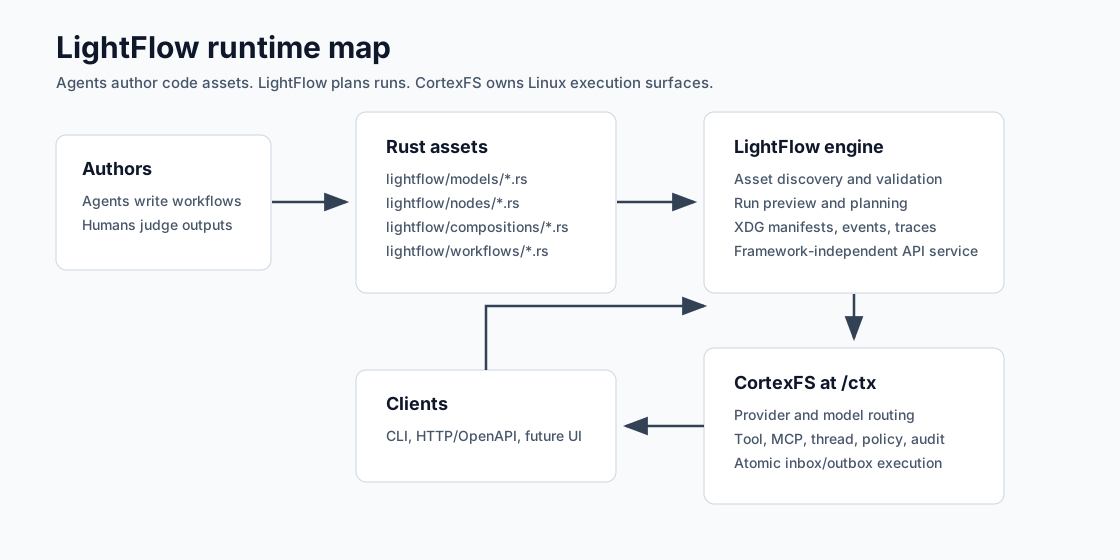
LightFlow is a backend-first AI workflow system. It treats pipelines as reviewable Rust assets that agents and engineers can edit, instead of making a visual canvas the source of truth.
Reading Path
If you are new to the project, read in this order:
- Core Concepts for the vocabulary.
- Architecture for the module boundaries.
- Asset Model and Workflow DSL for authoring rules.
- Runs and State and Execution Lifecycle for the runtime path.
- CortexFS Integration for the execution substrate boundary.
- Roadmap for the next engineering priorities.
Product Thesis
ComfyUI is excellent at human feedback loops: inspect output, move a slider, change a seed, update a prompt, and judge whether the result improved. LightFlow keeps that human judgment loop, but moves workflow construction into code.
Workflow construction is often software engineering:
- reading provider and model documentation
- resolving models and capabilities
- validating input and output shapes
- building reusable modules
- exposing stable API contracts
- recording runs in an inspectable format
LightFlow lets agents perform that engineering work while humans direct goals, constraints, and review.
Architecture Goals
The first goal is not a full scheduler. The first goal is a small, verifiable backend foundation:
- discover project and built-in Rust assets
- preview workflow runs without writing state
- create XDG-backed run manifests
- submit step requests through CortexFS atomic file semantics
- refresh manifest state from CortexFS outboxes
- expose a framework-independent API service usable by CLI and future HTTP adapters
Repository Zones
src/is engine code.lightflow/is versioned project asset code.cortexfs/is the Linux execution substrate submodule.openapi/is the external control-plane contract.docs-site/is this Bun + Nextra documentation site.
Design Principles
- Workflows are code assets, not serialized canvas state.
- Metadata and definition live in one
.rsfile. - Project assets stay separate from engine source.
- LightFlow owns workflow authorship and run structure.
- CortexFS owns provider, model, tool, MCP, thread, policy, and audit surfaces.
- Runtime state follows XDG directories and stays out of Git.
Last updated on